
How Can We Pay for Assisted Living Before Selling a Parent's Home?

If Mom or Dad needs assisted living but all their money is tied up in their house, you may not have to sell the home before getting them moved. Depending on the situation, we may be able to tap into the home's equity, cover the immediate expenses, and then get the house ready to sell.

I'll tell you, this is one of the biggest problems I run into when I'm helping families move a parent into assisted living. Mom or Dad has lived in the same house for 30 or 40 years. They've built up a tremendous amount of equity, maybe even paid the whole thing off. But now they need assisted living, and the family doesn't have the cash to make that happen.
So what do you do? Well, the first thing I want families to understand is that they have options. And sometimes, those options can make a significant difference in how smoothly this whole thing goes and how much money the family ultimately walks away with.
Why Is It So Difficult to Pay for Assisted Living When My Parent Owns a Home?
The problem is that having equity in a house and having money in the bank are two completely different things. Your parent may have hundreds of thousands of dollars in home equity, but that doesn't help pay next month's assisted living bill unless there's a way to access that money.
And assisted living is not cheap. According to the 2025 CareScout Cost of Care Survey, the median assisted living cost in Colorado is $6,584 per month for a private one-bedroom unit. That's approximately $79,000 a year, and depending on the facility and the level of care your parent needs, it can cost considerably more.
| Assisted Living Cost | Colorado Median |
|---|---|
| Monthly | $6,584 |
| Annual | $79,005 |
| Three months | Approximately $19,752 |
Source: CareScout 2025 Cost of Care Survey. The three-month figure is calculated using the published monthly median. Actual costs vary by facility and care needs.
Now imagine your parent needs to move into assisted living immediately. Maybe they've had a fall, they're struggling with daily activities, or they're simply no longer safe living alone. The family finds a good community, but there may be an entrance fee, the first month's payment, moving expenses, and a whole bunch of other costs. Meanwhile, most of the money is sitting in the house.
According to the U.S. Census Bureau, the median value of an owner-occupied home in Broomfield County was $664,500 for 2020 through 2024. That doesn't tell us how much equity any particular homeowner has, but it gives you an idea of how much wealth can be tied up in real estate. And that's the problem we're trying to solve.
Do We Have to Sell My Parent's House Before Moving Them Into Assisted Living?
No, not necessarily. Depending on the amount of equity in the home and your parent's financial circumstances, there may be ways to pay for assisted living before the house sells. One option I've used with families is a short-term bridge loan, which can provide money for the move and home preparation.
Here's where I think a lot of families get stuck. They assume the process has to happen in a certain order. First, sell the house. Second, get the money. Third, move Mom or Dad into assisted living.
But what if we could reverse that? What if we could get Mom into assisted living first, get her settled and taken care of, and then deal with the house? Because sometimes these properties need a lot of work. We've got contents to remove, contractors to coordinate, maybe some flooring and paint. And then we've still got to sell the thing.
According to Realtor.com's September 2026 housing data, homes in Broomfield County had a median of 47 days on the market. That doesn't include all the time a family might spend clearing the house, making repairs, or waiting for a buyer to close. And the senior may need care right now. That's where bridge financing can potentially make a difference.
What Is a Bridge Loan, and How Can It Help Pay for Assisted Living?
A bridge loan is short-term financing that can give a homeowner access to money before their property sells. In some of the senior transitions I've handled, we've arranged private loans secured by the home's equity. That money can help pay for assisted living, moving expenses, cleanouts, and preparing the property for sale.

Let me explain how this works because it's something I do quite a bit. Let's say Mom has a house worth $600,000, and she doesn't have a mortgage. She needs $40,000 to get into assisted living and get the house ready to sell. In the right situation, I may be able to arrange that financing through one of my private lending relationships.
The lender provides the money, and the loan is secured against the property with a deed of trust. In simple terms, that's a lien on the property that protects the lender's interest. Now, that money can help cover approved expenses such as:
- Assisted living deposits and initial monthly payments.
- Moving expenses and necessary personal items.
- Professional estate sales and contents removal.
- Cleaning, painting, flooring, and repairs.
- Other approved costs associated with the transition and home sale.
Once the property sells, the bridge loan is paid off according to the agreed-upon terms, along with any other loans and closing expenses. Now, here's something very important. Bridge loans aren't free money. They have interest, and they may have additional fees. They're also secured against the house, so there's risk involved if the loan can't be repaid.
For example, a $40,000 loan at 14% simple annual interest would accumulate approximately $1,867 in interest over four months, before fees and assuming no payments or compounding. That's just an illustration, not a quote or a description of what any particular client paid.
We need to look at the actual loan terms, including what happens if the property takes longer than expected to sell. As the Consumer Financial Protection Bureau explains, borrowing against a home puts that property at risk if the loan isn't repaid.
At the end of the day, I want the family to understand what this is going to cost and whether it actually makes sense for their situation. If it does, we may have a way to move forward without rushing the home sale.
Have You Actually Helped a Family Use Home Equity to Pay for Assisted Living in Arvada?
Yes. One family I worked with on Newland Street in Arvada needed to get their mother into assisted living, but the money was tied up in her house. We arranged a $40,000 bridge loan to help fund her care and prepare the property. The home ultimately went under contract for $503,000.
This was one of those situations where a senior advisor contacted me because the family had a problem that needed to get handled. So we met with the senior and her daughter that same day, looked at what was going on, and started putting together a plan. My first priority was making sure the senior was taken care of and could get into the appropriate assisted living environment.
We were able to arrange a $40,000 bridge loan that helped pay for assisted living, personal items, contractors, and expenses associated with getting the property ready for sale.
Newland Street in Arvada: Before We Started
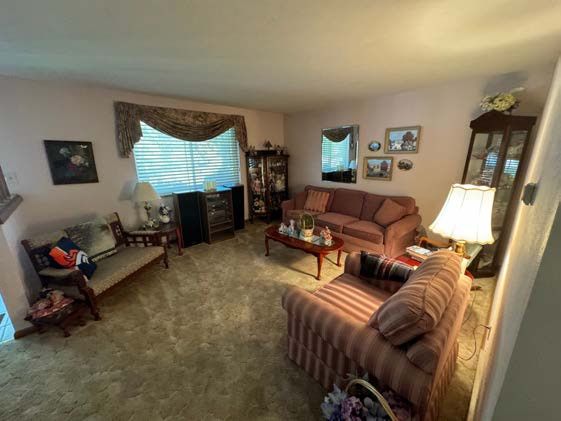
Actual client property: Newland Street, Arvada, Colorado, before preparation for sale.
Now, the house also had a considerable amount of contents, which is something we run into all the time with senior properties. We brought in a professional estate sale company to handle the estate sale, then coordinated removing what was left. After that, we cleaned the house and made some strategic improvements to help position it for the market.
Newland Street in Arvada: After the Improvements

Actual client property: Newland Street after cleanout, improvements and staging.
We also helped coordinate the family's medical and financial power-of-attorney arrangements and made sure the senior could sign the necessary documents with the appropriate assistance. Then we put the property on a competitive online bidding platform. We started the bidding at $415,000, generated interest from buyers, and ultimately got the home under contract for $503,000.
Now, I can't promise every home will have the same result. Every property, every market, and every situation is different. But think about what we accomplished here. We helped get the senior into assisted living, provided access to financing, handled the contents, coordinated the work, and got the house under contract.
The family didn't have to figure out all those moving parts by themselves. That's the kind of situation I really enjoy helping people work through.
Should We Sell My Parent's House As-Is or Fix It Up Before Selling?
That depends on the home's condition, the amount of work it needs, how quickly the family needs to sell, and what everything is going to cost. Sometimes selling as-is makes the most sense. Other times, spending some money to shine the place up can improve the family's final net proceeds.
One of the things I do a little differently from a traditional real estate agent is that I don't like giving people just one option. I've spent years working with renovation budgets, investments, and property valuations. I'm also kind of a spreadsheet geek. So when I walk into one of these homes, I'm looking at multiple possibilities.
We might evaluate selling the home exactly as it sits to an investor. Then we'll look at what happens if we clean it out, put in some flooring, paint the walls, and give it a little spit shine. We might also look at more extensive updates or even a full renovation if the numbers justify it.
Then I put those different scenarios into a spreadsheet and show the family:
- What we think the house could sell for.
- What the improvements would cost.
- How much time the work could take.
- What the selling and closing expenses would be.
- What loans and other obligations need to be paid.
- Most importantly, what the family could actually walk away with.
Because here's the thing. I don't really care if we can sell a house for $50,000 more if it takes $60,000 in improvements and additional expenses to get there. That doesn't make sense. What matters is how much money ends up in your parent's bank account when everything is said and done.
A Real Senior Transition in Loveland, Colorado
We've worked through some incredibly complicated situations, including one on Del Norte Street in Loveland. That case involved a long-term care insurance waiting period, an existing reverse mortgage, and a conservatorship that had to be established.
We helped arrange a $25,000 bridge loan, coordinated a major cleanout and improvements, and ultimately got that property under contract for $420,000.
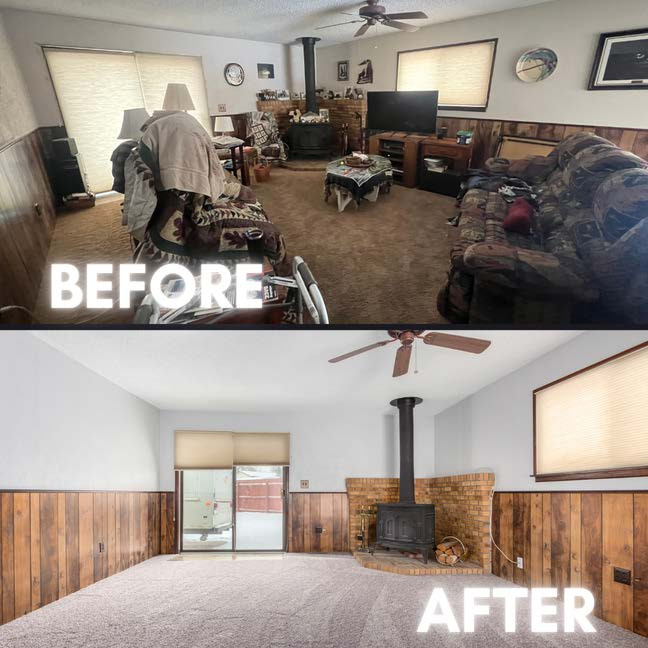
Actual client property: Del Norte Street in Loveland, Colorado, before and after preparation for sale.
It was a complicated transaction with a lot of moving parts. But we put together a plan and worked through it.
Are There Other Ways to Pay for Assisted Living Besides a Bridge Loan?
Yes. Depending on your parent's circumstances, there may be savings, long-term care insurance, family assistance, a home equity loan, a HELOC, or certain public benefits worth investigating. Each option has different requirements, costs, and limitations. The important thing is understanding what's actually available before making a decision about the home.
One of the first things I want to know is whether there's a long-term care insurance policy in place. If there is, we need to understand when it starts paying, what it covers, and whether there's an elimination period where the family has to pay expenses first. We also need to look carefully at any existing mortgage or reverse mortgage.
A reverse mortgage can become a problem when the homeowner permanently moves into assisted living because the loan may become due. The Consumer Financial Protection Bureau explains the rules and exceptions, including situations involving a spouse or co-borrower.
And then there's Medicare and Medicaid, which families understandably get confused about. Medicare generally doesn't cover long-term custodial care, which is the kind of help many seniors receive in assisted living.
Colorado's Elderly, Blind, and Disabled Waiver may help eligible individuals receive certain long-term services, including services at qualifying alternative care facilities. But there are financial and medical eligibility requirements, and it doesn't mean every assisted living expense is covered.
These are situations where I encourage families to involve the appropriate insurance specialist, benefits professional, or elder-law attorney. My job is to help solve the real estate side of the problem and coordinate with the other professionals involved.
What Should We Do First if Mom or Dad Needs Assisted Living Right Away?
Start by figuring out exactly what your parent needs, how much money is required, and how quickly the move must happen. Then look at the equity in the house, any existing loans, and the home's condition. Once we understand those pieces, we can start comparing realistic options and building a plan.
When I meet with a family, I spend a lot of time listening. I want to know what's happening. What's the pain point? Is the biggest problem money? Is it the contents of the house? Is Mom refusing to move? Is there a power-of-attorney issue?
Because every one of these situations is different. But generally speaking, here's how I approach it:
- Take care of the senior. Work with the family and senior advisor to understand the care needs, timing, and appropriate living arrangements.
- Look at the money. Determine what's available, what the home is worth, how much equity exists, and whether financing might be appropriate.
- Evaluate the property. Walk through the home, review its condition, and determine what needs to happen before selling.
- Build several scenarios. Compare as-is selling, basic improvements, and larger projects where appropriate. Put real numbers behind each option.
- Let the family decide. They're driving the bus. I'm here to explain the choices and help them make the decision that works best.
- Get it done. Once the family chooses a path, we coordinate the necessary work and move toward closing.
Families in Broomfield and the greater Denver area can also contact the Denver Regional Council of Governments Area Agency on Aging for information about aging services, resources, and available support. There's no reason you should have to figure out every piece of this by yourself.
Who Can Help Us Pay for Assisted Living and Handle the House in the Denver Area?
If you're trying to figure out how to pay for assisted living and most of your parent's money is tied up in their home, that's exactly the kind of situation I help families work through. We'll evaluate the property, look at the financial options, and put together a realistic plan to move forward.
I'm Scott Jensen with ReZion Realty, brokered by eXp Realty, in Broomfield, Colorado. I work with seniors and their families throughout the Denver Metro area, including Broomfield, Arvada, Westminster, and the surrounding communities.
Some of the situations I work on are fairly straightforward. Others involve hoarding, probate, conservatorships, financing problems, or a home that needs a considerable amount of work. That's okay. I've handled a lot of these situations, and I know how to work through the moving parts.
My goal is to maximize your situation, take care of your family at the highest level, and get everyone across the finish line. If you're dealing with this right now, give me a call. Tell me what's going on, and we'll start looking at your options.
Scott Jensen | ReZion Realty, brokered by eXp Realty
Phone: 720-352-7704
Email: scott@rezion.us
Important: Financing is subject to lender approval, available equity, loan terms, and applicable requirements. Borrowing against a property involves costs and repayment risks. Real estate, legal, tax, insurance, and Medicaid decisions should be reviewed with appropriately qualified professionals. Past client results are not guarantees of future outcomes.
Recent Posts