
Should We Fix Up Mom or Dad's Older House Before Selling, or Sell It As-Is in Denver?

You don't necessarily need to renovate Mom or Dad's house before selling it. Sometimes a little cleanup, paint, and flooring can make a big difference. Other times, selling as-is makes more sense. The key is to look at the available options, run the numbers, and figure out what puts the most money in your family's pocket.

So, here's a situation I run into all the time.
Mom or Dad has lived in the same house for 30, 40, maybe even 50 years. The home has served them well, but it's starting to show its age. The kitchen hasn't been updated in decades, the carpet is worn out, the yard needs attention, and there's an entire lifetime of belongings inside.
Now something has changed. Maybe Mom needs assisted living. Maybe Dad can't safely live alone anymore. And the family is trying to figure out what to do with the house.
One person says, "We need to fix this place up before we sell it."
Someone else says, "Absolutely not. Let's just sell it as-is and be done with it."
And meanwhile, nobody really knows which option is going to make the most financial sense.
I've helped more than 35 families work through senior moves and all the real estate challenges that come along with them. I've also held the Seniors Real Estate Specialist® (SRES®) designation for over five years. And I'll tell you, no two situations have ever been exactly alike. That's why I believe it's so important to understand what's going on before deciding what to do with the house.
I've dealt with homes that needed a little spit shine, homes that required major renovations, and homes where selling directly to an investor was the right move.
Here's what I've learned: Don't start spending money until you understand your options.
Is It Better to Fix Up an Older Parent's House or Sell It As-Is?
Neither option is automatically better. I've seen situations where spending a relatively small amount on improvements made a meaningful difference in the sale. I've also seen properties where putting money into renovations simply didn't make sense. What matters is the home's condition, the family's circumstances, and how much money everyone will actually walk away with.
When I first sit down with a family, I'm not thinking about how quickly I can get a listing agreement signed.
I'm trying to understand what's going on.
What's happening with Mom or Dad? Does the family need money right away? Is the house full of belongings? Are there repairs that absolutely need to be made? Is everybody living here in Colorado, or are the children trying to manage everything from another state?
All of those things matter.
Once I understand the situation and evaluate the property, I generally look at several possible ways to move forward.
- Sell completely as-is. Do very little to the property and find a buyer willing to take on the work.
- Give the house a spit shine. Clean it out, freshen things up, address the obvious problems, and get it ready for market.
- Bring it up to neighborhood standards. Make the improvements needed to compete with similar homes nearby.
- Complete a more extensive renovation. Evaluate whether updating kitchens, bathrooms, flooring, and other features could justify the cost.
- Consider different ways to sell. Compare a traditional MLS listing, an auction-style bidding platform, or a direct sale to investors.
I've spent years building spreadsheets that allow me to compare these scenarios, including the estimated costs, expected sale prices, and projected net proceeds.
Because the highest selling price doesn't always mean the most money in your bank account.
That's what we're trying to maximize.
What Is the Denver Housing Market Like for Older Homes in 2026?
Homes in Denver and the northwest suburbs still represent substantial equity for many families, but buyers are comparing condition, price, and value. Recent sales data shows different price levels and selling timelines across Arvada, Broomfield, and Westminster. Before deciding whether to renovate, we need to understand what comparable homes are actually selling for.
Let's put a few numbers around that.
According to Redfin, these are the reported median sale prices and median days on market for the three-month period ending September 2026, across all home types.
| City | Median Sale Price | Median Days on Market |
|---|---|---|
| Arvada | $624,703 | 28 |
| Broomfield | $649,191 | 34 |
| Westminster | $518,753 | 34 |
Sources: Redfin Arvada, Redfin Broomfield, and Redfin Westminster. These are citywide figures, not valuations of individual properties.
REcolorado also reported a $575,000 median closed price and 33 median days in MLS for the Denver Metro area in September 2026.
You can review its September 2026 market report here.
Now, here's the thing.
Just because homes in Arvada are selling at a median price of approximately $625,000 doesn't mean Mom's house is worth that amount. A beautifully updated house and one that hasn't seen a renovation since 1985 are two very different properties.
We need to look at the neighborhood, the condition of the competing homes, and what buyers are actually paying.
That's where the analysis begins.
What Repairs Are Worth Making Before Selling Mom or Dad's House?
Usually, I start by looking at the improvements that could make the house easier to sell without creating a huge renovation project. Cleaning, paint, flooring, basic repairs, and landscaping are often worth evaluating. But I don't automatically recommend doing everything. We need to know what each improvement costs and whether buyers will pay enough more to justify it.
One thing I've noticed working with seniors is that many of these homes haven't necessarily been neglected intentionally.
People get tired.
Keeping up with the house gets harder. The yard becomes more difficult to maintain. Things that used to get fixed right away are put off. And over time, those smaller problems start adding up.
It's understandable, and it's something I've seen many times.
An April 2026 Adams County Housing Needs Assessment, published as a draft, reports that 24% of housing units countywide were built before 1970. In unincorporated Adams County, that number was 58%, based on 2019–2023 Census estimates.
Of course, an older house isn't automatically a problem. Some have been maintained beautifully. Others need work.
When I'm evaluating one of these properties, here's what I generally look at first:
- Contents and cleaning: Can we remove what isn't needed and make the home easier for buyers to walk through?
- Paint: Would fresh interior paint help the property show better?
- Flooring: Is the carpet worn out? Could the hardwood floors be refinished instead of replaced?
- Kitchen and bathrooms: Do they need major improvements, or would cleaning and a few minor updates be enough?
- Landscaping: Can we improve curb appeal without investing a fortune?
- Major repairs: What's going on with the roof, furnace, water heater, plumbing, and other systems?
But I'm not looking at that list and automatically telling the family to start writing checks.
I'm looking at what makes sense for that particular property.

Sometimes we can get a house cleaned up and shined up without doing much more. Other times, we need to consider a completely different approach.
When Does Selling Mom or Dad's House As-Is Make More Sense?
Selling as-is can make a lot of sense when a house needs extensive work, the family doesn't have the funds or time to renovate, or a quick sale is particularly important. The tradeoff is that buyers generally account for the repairs they'll need to make. The goal is to create the best possible outcome given those circumstances.
Let me tell you about a property we handled in Aurora.
A senior advisor reached out about a situation where the family needed help. We went to the property, walked through everything, and quickly realized this wasn't going to be a typical listing.
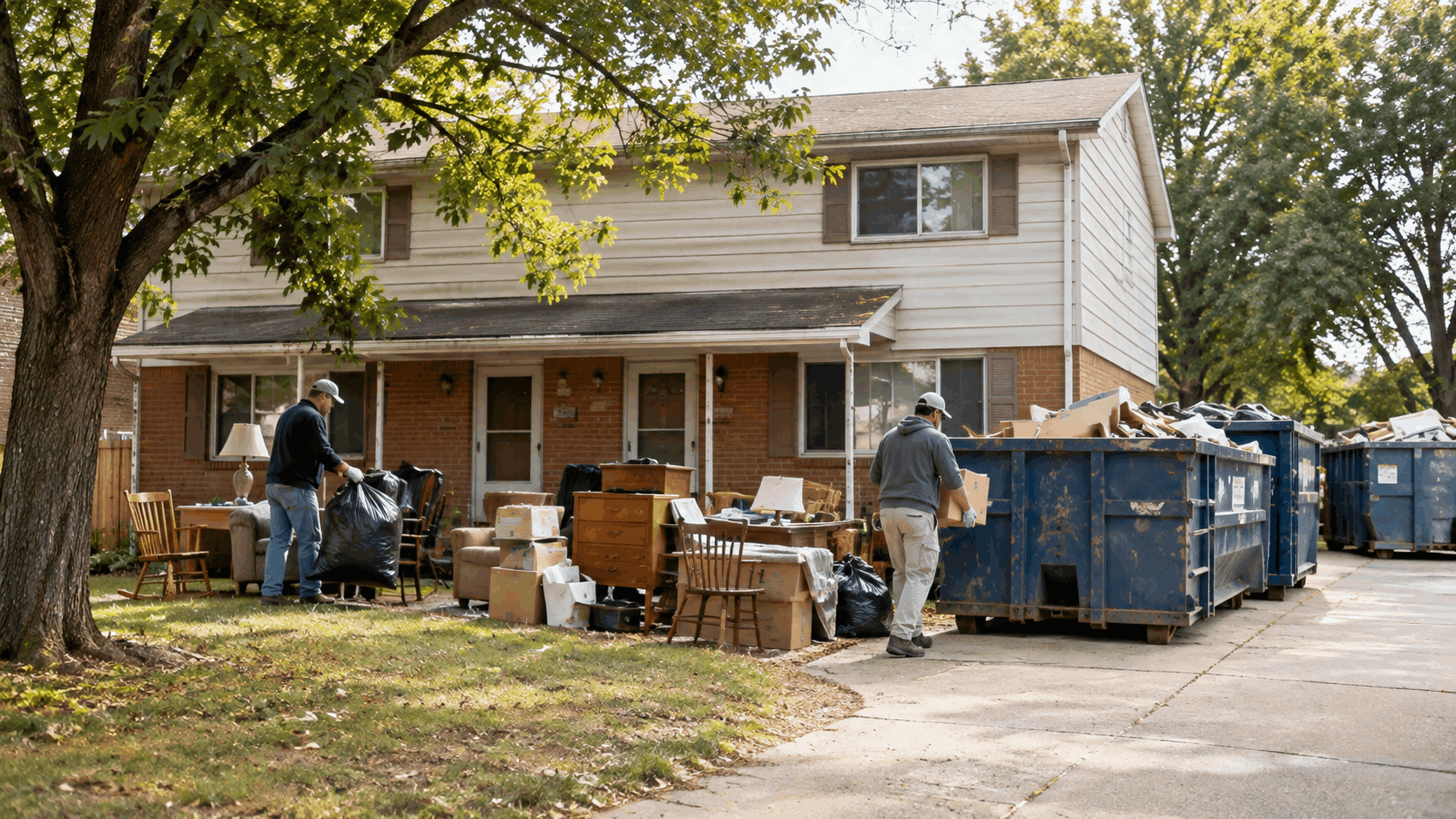
It was a 2,200-square-foot duplex with an extreme amount of belongings.
We ended up bringing in crews and coordinating a cleanout that required 11 roll-off dumpsters.
Eleven dumpsters. That's a substantial amount of stuff.
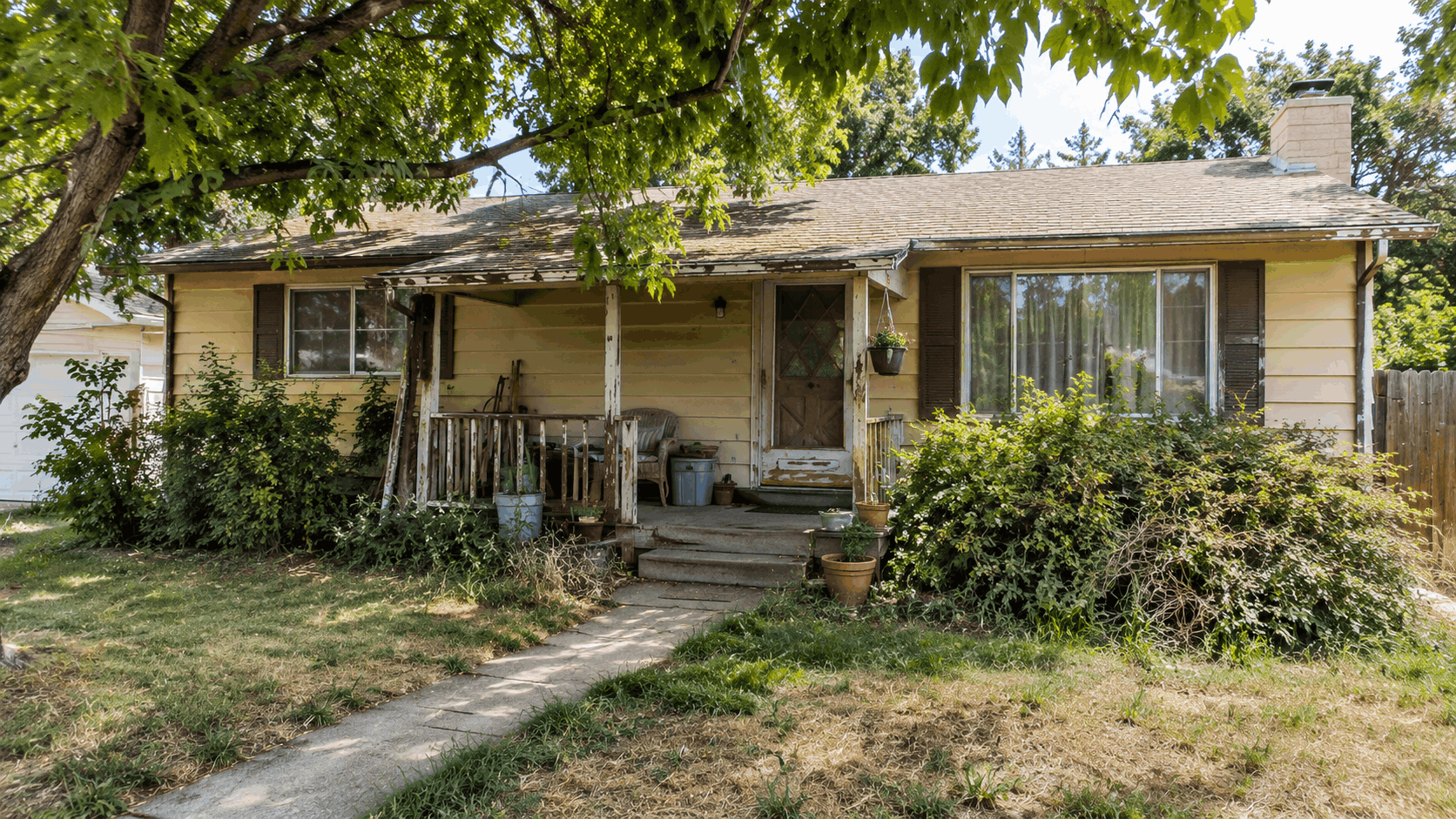
And once we got everything out, we could finally get a better picture of the property itself.
The inside needed a full renovation. But after evaluating the roof, HVAC, and structure, we determined that selling to investors could be a more practical approach than having the family take on an extensive remodel.
So that's what we did.
We marketed the property directly to our investor network and scheduled an investor-only showing. Approximately 40 to 50 investors came through that day.
We got competition going, the property went under contract immediately, and we closed within a week.
Now, that doesn't mean every house can sell in a week. It depends on the property, the buyer, and the terms.
But this is a good example of why I don't believe every older home needs to be renovated before it sells.
In that particular situation, we found another way to get the job done.
It's also important to understand that selling a home as-is doesn't remove applicable Colorado disclosure responsibilities. You can find additional consumer information through the Colorado Division of Real Estate.
Can a Little Paint, Flooring, and Cleanup Really Make a Difference?
Absolutely. I've seen properties where relatively straightforward improvements changed how buyers responded to the home. The key is choosing improvements that actually matter to the people shopping in that neighborhood. Spending more doesn't automatically mean making more, and we still have to subtract the cost of the work from the final result.
Here's another property we worked on that shows a different side of the equation.
We had a property on 30th Street that was initially listed through a home-bidding platform in its existing condition.
It didn't sell.
So rather than continuing to do the same thing and expecting a different result, we looked at what we could change.
We went in, installed new flooring, painted, and staged the property.
Nothing about that meant we needed to tear the whole house apart. We were focused on making it more presentable and more appealing to buyers.
We put it back on the market, and this time the property received an offer $30,000 above the asking price.
That was a great change in buyer response.
But here's something I want to be clear about: $30,000 over asking isn't the same as making $30,000 in additional profit.
We would need to account for the actual costs of those improvements, the asking-price changes, the additional time, and the final closing numbers before calculating the financial benefit.
And that's really my point.
For the Aurora property, an investor-focused sale made sense. For the 30th Street property, improving the presentation helped create a different outcome.
Two different properties. Two different strategies.
That's why I want to evaluate the options before making a recommendation.
How Do We Know Which Selling Option Will Actually Leave the Family With More Money?
We run the numbers. I want to look at what the house could sell for under several different scenarios, what it costs to get there, how long it might take, and what the family actually nets. The sale price by itself doesn't tell the whole story. What ends up in the client's bank account is what matters.
I'm a spreadsheet geek. I've been building and refining property-analysis spreadsheets for years, and this is one of the areas where I think they really make a difference for families.
Let's say we're looking at two options for Mom's house.
We could sell the property as-is, or we could spend some money improving it and potentially sell it for more.
Here are some completely hypothetical numbers to show how that comparison works.
| Financial Factor | Sell As-Is | Targeted Updates |
|---|---|---|
| Projected Sale Price | $450,000 | $490,000 |
| Preparation / Renovation | $0 | $20,000 |
| Estimated Selling Costs | $27,000 | $29,400 |
| Additional Carrying Costs | $0 | $3,000 |
| Projected Net Before Loan Payoff | $423,000 | $437,600 |
Illustrative figures only. This is not an actual client transaction or a quote for selling costs. Mortgage balances, liens, financing expenses, taxes, and other transaction-specific costs would need to be included in a real net-proceeds analysis.
Now, look at those numbers.
In this example, the updated house sells for $40,000 more.
Sounds great, right?
But once we account for the improvements, higher selling expenses, and extra carrying costs, the family is projected to walk away with only $14,600 more before loan payoff.
So here's the question.
Is that additional $14,600 worth the time, the expense, the risk, and the work involved?
For some families, absolutely.
For others, maybe not.
Maybe Mom needs money for assisted living right now. Maybe the family lives out of state. Maybe the renovation could take longer than expected.
Those things matter just as much as the projected selling price.
My job is to put the options in front of you, explain the numbers, and help you understand the tradeoffs.
Then you decide.
What If Mom or Dad Needs Assisted Living Before We Have Time to Fix Up the House?
In many cases, we can address Mom or Dad's living arrangements first and deal with the house afterward. The immediate priority is making sure they're safe and properly cared for. Then we can work through the finances, the belongings, the property condition, and the sale without necessarily forcing the family into a rushed decision.
I've worked with families where the senior needed to move immediately, but most of the available money was tied up in the home.
That's a difficult situation, because assisted living isn't going to wait for you to spend three months cleaning out a house.
Depending on the circumstances, one option may be an equity-based bridge loan that provides temporary financing while the property is being prepared and sold.
I've coordinated situations where this helped cover moving expenses, senior living costs, cleanouts, and property improvements.
Now, bridge financing isn't free money. There are interest charges, repayment obligations, and risks that need to be understood. It also depends on the property's available equity and the lending terms.
But the important thing is that families may have options they didn't realize were available.
And sometimes simply knowing that changes the entire conversation.
If this is the situation you're dealing with, I've covered it in more detail here:
Can We Move Mom Into Assisted Living First and Deal With the House Later?
Another common issue is not knowing which problem to handle first: the move, the belongings, or the sale of the house.
Here's another article that walks through that decision:
My Parent Suddenly Needs Assisted Living. What Should We Handle First?
And if the biggest obstacle is everything inside the house, you might find this one helpful:
What Do We Do With 30, 40, or 50 Years of Mom or Dad's Belongings?
These situations are connected. The move affects the house. The contents affect the preparation. And the financial situation affects the selling strategy.
It's all part of the same problem, and we need a plan that takes everything into account.
How Can Our Family Figure Out the Best Way to Sell Mom or Dad's House?
Start with an honest evaluation of the property and the family's situation before making expensive decisions. I look at the condition of the home, the available resources, the timeline, and the likely outcomes of different selling strategies. Then we compare the options so you can choose what works best for your circumstances.
Here's how I typically handle it.

First, we sit down and talk.
I want to understand what's happening, what needs to get done, and what the biggest pain points are.
Then I look at the house.
I take photos, evaluate the condition, look at the contents, consider any necessary repairs, and review what similar properties are selling for.
Next, I build out the options.
This is where my spreadsheets come in. We might compare selling as-is, doing a basic cleanup, making selected improvements, or completing a more extensive renovation.
For each realistic option, I want to show you what the work is expected to cost, what we think the home could sell for, and what you could actually net.
Then we sit back down and go through the numbers.
You ask questions. We talk about the pros and cons. We look at the timing and the financial implications.
And then you make the decision.
I always tell people that they're driving the bus. I'm here to facilitate and help get everything done.
Once the family chooses a direction, my team can help coordinate the property-related work, whether that involves cleanout crews, contractors, repairs, preparing the home for market, or getting it sold.
I've worked through many different types of situations over the years, and that's really where the experience comes into play. There isn't a single formula that works for everybody.
The goal is to maximize your situation and get everybody across the finish line.
Not Sure What to Do With Mom or Dad's House?
You don't need to have everything figured out before reaching out. Whether the house needs repairs, is full of belongings, or you're simply trying to understand what your options are, I'm happy to talk it through with you. Every situation is different, and there's rarely just one way to handle it.
I've helped more than 35 families through senior real estate transitions, and I can tell you that no two have been exactly alike.
So if you're sitting there wondering what to do with Mom or Dad's house, I'm happy to talk it through with you.
Give me a call or shoot me a text at 720-352-7704, and let's talk about your options.
We'll figure out what makes the most sense for you and your family.
Scott Jensen
Seniors Real Estate Specialist® (SRES®)
ReZion Realty, brokered by eXp Realty
Broomfield, Colorado
Phone: 720-352-7704
Email: scott@rezion.us
Website: www.rezion.us
Recent Posts