
Is Inflation Driving Denver Home Prices Down? Understanding the Housing Correction Since 2022

Inflation has contributed to Denver's housing market correction, but it's not acting alone. Higher everyday expenses, increased mortgage rates, and tighter buyer budgets have changed what people can afford. While Denver home prices have declined modestly from their 2022 peak, their inflation-adjusted value has fallen considerably more. Understanding that difference matters whether you're buying or selling.

Here's the thing. Every time I hear somebody talking about the next housing crash, I want to sit down and run the numbers. Not because I think the market is perfect. It isn't. But because there's a difference between a housing market that's crashing and one that's correcting after years of unusually strong price growth. I think inflation is a big part of that conversation, and it's something homeowners need to understand.
In 2022, buyers were fighting over properties. Multiple offers, bidding wars, waived contingencies, and people paying more than asking price were common in competitive parts of Denver Metro. Today, many of those same buyers are looking at substantially higher monthly housing costs, and they still have to pay for groceries, insurance, utilities, transportation, and everything else. So, something has to give. For some buyers, that means purchasing a less expensive home. Others wait, and some simply can't qualify for the mortgage they need. When buyers lose purchasing power, sellers eventually feel it. That's what I want to talk about.
Is Denver's Housing Market Crashing or Correcting?
Denver's housing market is experiencing a correction from its 2022 peak, but current data doesn't establish a marketwide crash. Home prices have held up better than transaction activity, and different types of properties are performing differently. Higher borrowing costs and affordability pressures have changed buyer behavior, creating a more competitive environment for sellers.
Let's look at what's happened. According to REcolorado's May 2022 market report, the Denver Metro median closed home price was $615,000. By October 2026, REcolorado reported a median closed price of $592,000. That's a decrease of approximately 3.7%. Now, someone might look at that and say, "Scott, that's not much of a correction." On paper, maybe not. But I'll tell you, there's more going on than that 3.7%.
The October 2026 Denver Metro Association of REALTORS market report showed closed sales down 23.54% compared with October 2025. It also reported that 65% of completed sales involved seller concessions. That's a different environment from the bidding wars we saw in 2022. And it's important to understand that these numbers describe different things. The median closed price tells us the midpoint of homes that sold. It doesn't track the appreciation or depreciation of one specific property. Meanwhile, falling sales volume tells us fewer transactions are happening, not necessarily that every home's value is falling.
The housing market isn't one big number. A detached home in Broomfield can have a completely different market than a condo in Thornton or a townhome in Westminster. We have to look at the individual property, its condition, its competition, and the buyers we're trying to attract.
How Much Have Denver Homes Really Lost in Value Since 2022?
Denver Metro median closed prices declined approximately 3.7% between May 2022 and October 2026, according to REcolorado. But when we adjust that comparison for approximately 16.4% cumulative Denver-area inflation, the decline in purchasing-power-adjusted value is about 17.3%. That's a significant difference, even though it doesn't mean actual selling prices dropped by 17.3%.
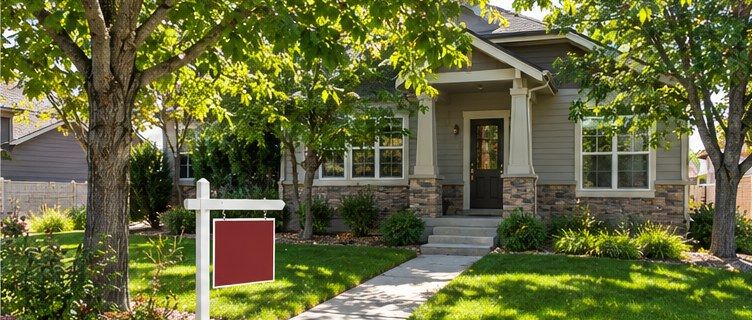
Let's run the numbers using a $500,000 home. Suppose you had a house worth $500,000 in May 2022. If that property experienced the same 3.7% decline reflected in the metro median-price comparison, its hypothetical value today would be approximately $481,300. That's a decrease of about $18,700. But now let's bring inflation into the picture. According to the U.S. Bureau of Labor Statistics' May 2022 Denver Consumer Price Index and its September 2026 report, consumer prices in the Denver-Aurora-Lakewood area increased approximately 16.4% over that period. That means it takes more dollars today to purchase the same general basket of consumer goods and services.
When we adjust our hypothetical $481,300 home value for that inflation, its equivalent value in 2022 purchasing power is approximately $413,300. Here's what that looks like:
What Does a $500,000 Home Look Like After Price Changes and Inflation?
| Measurement | Value |
|---|---|
| Hypothetical home value in May 2022 | $500,000 |
| Estimated current value using the metro median change | $481,300 |
| Nominal dollar decline | $18,700 |
| Denver-area cumulative inflation | 16.4% |
| Current value expressed in 2022 dollars | $413,300 |
| Inflation-adjusted decline | 17.3% |
Illustrative example based on REcolorado median prices and BLS inflation data. This is not an appraisal or an estimate of what a particular property would sell for.
Now, I want to make an important distinction. I'm not saying your $481,300 house would only sell for $413,300 today. Those are two different numbers. The $481,300 is our hypothetical current dollar value, while the $413,300 represents what that value is equivalent to in 2022 purchasing power. But the difference is important because it shows how inflation can erode the purchasing power of an asset even when its actual price hasn't fallen dramatically. That's one piece of this correction that doesn't get enough attention.
Why Are Higher Prices and Mortgage Rates Making Homes Harder to Afford?
Inflation has increased household expenses, while higher mortgage rates have made borrowing more expensive. That combination leaves many buyers with less room in their budgets. Even if a home's price has declined slightly, the monthly payment can be substantially higher than it was in 2022. This affordability squeeze can reduce demand and pressure sellers to negotiate.

Here's where things get interesting. In May 2022, Freddie Mac reported an average 30-year fixed mortgage rate of 5.10%. On November 12, 2026, that average was 7.11%. Let's take our hypothetical $500,000 home with a 20% down payment. In 2022, with a $400,000 mortgage at 5.10%, the monthly principal and interest payment would have been approximately $2,172. Now let's say the home's purchase price has dropped to about $481,300. With the same 20% down payment and a 7.11% mortgage rate, the monthly principal and interest payment would be approximately $2,590.
How Much Does the Monthly Mortgage Payment Change?
| Mortgage scenario | May 2022 | November 2026 |
|---|---|---|
| Purchase price | $500,000 | $481,300 |
| Down payment | 20% | 20% |
| Mortgage rate | 5.10% | 7.11% |
| Monthly principal and interest | $2,172 | $2,590 |
Illustrative 30-year fixed-rate calculations using Freddie Mac survey rates from May 26, 2022, and November 12, 2026. Excludes property taxes, homeowners insurance, HOA dues, closing costs, and other expenses. Actual loan offers vary.
The purchase price went down, but the monthly principal and interest payment went up by about $418. That's roughly $5,000 more per year. Now add the increase in living expenses since 2022, and you can see why buyers are thinking differently. That's why I believe inflation and mortgage rates are such an important part of Denver's housing correction. You can't expect buyers to keep paying 2022 peak prices when their monthly budgets are under this much pressure.
What's the Difference Between Appraised Value and What Buyers Will Pay Today?
An appraisal is a professional opinion of a property's market value, based on available information and a specific valuation date. An asking price is what a seller hopes to receive. The actual sale price is what a buyer and seller agree upon. In a changing market, those numbers may not match, and recent comparable sales matter more than memories of 2022.

Let's go back to the height of the market. Suppose a home was reasonably valued at $500,000, but buyers were competing so aggressively that someone offered $550,000 or even $575,000. Could that happen? Absolutely. But that extra money wasn't guaranteed to be there forever. It reflected the competition, financing conditions, and buyer motivations at that particular moment.
Now, fast-forward to today. You might have a home with an online value estimate, a previous appraisal, or a neighbor's sale from several years ago suggesting a particular number. But today's buyer has to look at the house, the monthly payment, the property taxes, the insurance, any HOA fees, and the competing homes available. Then they decide what they're willing and financially able to pay. That's why I don't believe sellers should ignore appraisals or online estimates, but I also don't believe they should treat those numbers as guarantees.
When I evaluate a property, I want to know what similar homes have actually sold for, which properties are under contract, what buyers are comparing, and how the condition of the house stacks up. That's how we begin to determine a realistic asking price. The market doesn't care what we wish the number would be. We need to understand what the evidence supports.
Why Are Some Denver Homes Sitting on the Market While Others Are Selling?
Homes can sit on the market because of pricing, property condition, competition, financing costs, and buyer expectations. October 2026 Denver Metro data showed a meaningful difference between detached homes and condos or townhomes. Sellers who understand their specific market and adjust their strategy accordingly may be better positioned than those relying on outdated prices.
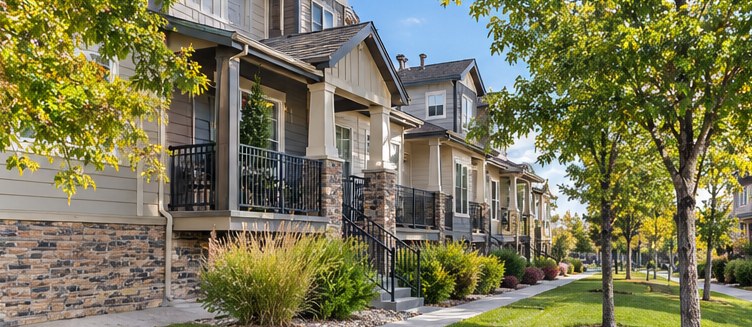
I'll tell you, one of the biggest mistakes a seller can make is pricing a home based on what the neighbor received during the 2022 bidding wars. That was a different market. According to DMAR's October 2026 report, detached homes had a median closed price of $645,000 and spent a median of 26 days in the MLS. Attached properties, including condos and townhomes, had a median closed price of $375,000 and spent a median of 48 days in the MLS. Those are meaningful differences.
The report also showed that 65% of October's completed transactions involved seller concessions, averaging $12,557. That's not 65% of homes expiring. It's 65% of completed sales involving some form of concession. A seller concession might help a buyer cover closing costs or temporarily reduce their mortgage interest rate. It can make a transaction work even when the recorded sale price doesn't change much.
So if we're evaluating a property in Arvada, Westminster, Thornton, or Broomfield, I don't want to rely on one big Denver Metro statistic. I want to know exactly what we're competing against. Does the home need repairs? Would fresh paint and a little spit shine help? Would spending $15,000 on improvements produce enough additional net proceeds to justify the expense? Or would we be better off pricing the property appropriately and selling it as-is? Those are the decisions that matter.
Is Denver's Housing Correction Creating Opportunities for Buyers?
A slower market can create opportunities for buyers through greater selection, price negotiations, and seller concessions. However, a lower purchase price doesn't automatically make a home affordable. Buyers still need to evaluate mortgage payments, ownership costs, property condition, and their long-term plans. The right opportunity is one that works financially today, not one that depends on future predictions.

I think today's market can offer some real opportunities for buyers, and I'm not saying that simply because I sell real estate. Think about the difference between competing against ten other buyers and being the only serious buyer negotiating on a property. There's value in that. Maybe we negotiate a lower price. Maybe we ask the seller to contribute toward closing costs or an interest-rate buydown. Maybe we negotiate repairs that would have been difficult to request in 2022. But we still have to run the numbers.
I hear the phrase, "Marry the house, date the rate." I understand what people mean by it. Interest rates change, and refinancing could become an option in the future. But I don't want somebody purchasing a house they can barely afford today because they're counting on refinancing later. Rates might decline, or they might increase, and refinancing depends on future qualification, property value, available loan products, and costs. The payment needs to work now.
If we can find a home that fits your life, negotiate favorable terms, and keep the monthly payment comfortable, that's worth exploring. Waiting might work, too. It depends on your circumstances.
Should Denver Homeowners Sell Now or Wait for Prices to Recover?
Whether to sell now or wait depends on your equity, carrying costs, timing, property condition, and reasons for moving. Home prices could improve, remain flat, or decline further. Rather than predict the market, I prefer comparing realistic selling scenarios and calculating what the homeowner could actually walk away with after expenses.
This is where I spend a lot of time with my sellers. Let's say you want to move, but you're thinking about waiting another year because you believe your house will be worth more. Okay. That's an option. But before we make that decision, let's calculate what waiting costs. There's the mortgage payment, property taxes, insurance, utilities, maintenance, and possibly HOA dues. Some of those expenses may be offset by the benefits of continuing to live in the home, and part of your mortgage payment may reduce your loan balance.
If you're thinking about renting the property instead, we need to look at expected rent, vacancy, repairs, management, taxes, insurance, financing, and the responsibilities that come with being a landlord. Then we compare those options with selling today. And if we're going to sell, let's determine whether we should list the house as-is, do some targeted repairs, or invest in more substantial improvements. The highest selling price doesn't necessarily mean the highest net proceeds.
What matters is what actually ends up in your bank account. That's why I build out different financial scenarios before recommending a direction. You have options. My job is to help you understand them.
How Do You Know When Buying or Selling a Denver Home Makes Financial Sense?
The right time to buy or sell depends more on your personal financial situation than on predicting the housing market. Buyers should examine affordability, financing, and long-term plans. Sellers should compare sale proceeds, preparation costs, and timing. The goal is to make an informed decision supported by numbers rather than headlines about crashes or recoveries.
At the end of the day, I don't think anybody can consistently predict exactly when the housing market will reach its bottom or its next peak, and I don't think we need to. What we need is a plan. If you're buying, let's look at the homes available, what they'll actually cost each month, and whether the opportunity makes sense for you. If you're selling, let's evaluate your property, compare realistic selling options, account for the costs, and determine what you'll walk away with.
Sometimes the numbers tell us to move forward. Sometimes they tell us to wait. Either way, I want you to have enough information to make the decision that's right for you. Denver's housing market has changed since 2022. Inflation has reduced purchasing power, mortgage financing has become more expensive, and buyers are making decisions differently. That's not something to panic about. It's something to understand.
Let's stop waiting for the perfect market and start looking for the right opportunity.
I'm Scott Jensen with ReZion Realty, brokered by eXp Realty. I help buyers and sellers throughout Broomfield, Arvada, Westminster, Thornton, and the greater Denver Metro area evaluate their options and put together a plan. If you're wondering what your home could sell for today, or whether this market offers the right buying opportunity, let's sit down and run the numbers.
Scott Jensen | ReZion Realty, brokered by eXp Realty
Call or text: 720-352-7704
Email: scott@rezion.us
Market information is based on published data available as of November 17, 2026. Area-wide statistics and financial illustrations are educational, not property-specific valuations, loan offers, or predictions of future performance.
Categories
Recent Posts