
Should I Sell My Denver Home Now or Wait for Prices to Recover?
Denver Housing Market Series | Part 7 of 8 | By Scott Jensen
Whether you should sell your Denver home now or wait depends on your financial circumstances, monthly ownership expenses, available equity and reasons for moving. Waiting for home prices to recover may make sense for some homeowners, but carrying expenses, inflation and uncertain future property values can offset the financial benefits of a market recovery.
One of the conversations I've been having with homeowners is whether they should sell their house today or hang onto it for another couple of years and hope the market recovers. I completely understand the frustration, particularly if somebody had their house appraised at $750,000 a few years ago and we're now talking about putting it on the market for considerably less than that.
But here's the thing. Just because your house eventually gets back to that $750,000 valuation doesn't necessarily mean you've recovered what you've lost. We need to look at what it's costing you to hold onto the property, what's happening to the purchasing power of that money and what else you could be doing with the equity you have sitting in the house.
On the other hand, if you're comfortably living in your home, you've got a low interest rate and there's really no reason you need to move, I may tell you that staying right where you are makes perfect sense.
What I'd like to do is run the numbers on several different situations so you can start figuring out which one most closely resembles yours.
Are Denver home prices likely to recover?
Denver home prices may recover over time, but the timing and extent of that recovery remain uncertain. Elevated housing inventory, mortgage affordability challenges and declining transaction volume continue to influence the market. Individual properties may also recover at different rates depending on their location, condition, price range and the demand for that particular type of housing.
Throughout this series, we've looked at some of the reasons the Denver housing market is struggling. Buyers are having a difficult time affording houses, sellers are competing against more available properties and we're seeing a considerable number of listings expire without selling.
According to the Denver Metro Association of Realtors' October 2026 Market Trends Report, completed residential sales were down more than 23% compared with October of the previous year.
| Market indicator | October 2026 |
|---|---|
| Active residential listings | 12,978 |
| Year-over-year inventory change | +3.87% |
| Completed residential sales | 2,748 |
| Year-over-year sales change | −23.54% |
| Sales involving seller concessions | 65% |
Source: DMAR October 2026 Market Trends Report, released November 4, 2026.
We've certainly experienced difficult real estate markets in Denver before. The Federal Housing Finance Agency's historical Denver house price index illustrates periods when property values declined or remained relatively weak before eventually recovering.
But a recovery in a regional housing index doesn't necessarily mean that every house in Broomfield, Arvada, Westminster or Thornton has recovered its previous value. Different types of properties and different neighborhoods can perform considerably differently.
One of the things I don't want to do is tell somebody that if they just hang onto their house for another two or three years, everything's going to be fine. I don't know what the market is going to look like three years from now, and I don't think somebody should be making a significant financial decision based entirely on that assumption.
What we can do is evaluate what the property is worth today, what it's costing you to hold onto it and how much it would need to appreciate to justify waiting.
Related Reading — Article #4
How much does it actually cost to wait before selling a house?
The cost of waiting to sell a house includes mortgage interest, property taxes, insurance, maintenance, utilities and other ongoing ownership expenses. However, homeowners living in their properties should also consider the housing those expenses provide. The financial implications of holding a vacant house are considerably different from those of remaining in an affordable primary residence.
When somebody tells me they're going to wait until the market recovers before selling their house, one of the first things I want to know is whether they're still living in the property.
If they've already relocated to another state, moved into a senior living community or inherited a property that's sitting empty, we're looking at a house that may be costing them money every month without providing them with somewhere to live or generating any income.
Let's assume somebody owns a $600,000 property and has already moved out of the house.
| Monthly carrying expense | Estimated amount |
|---|---|
| Mortgage interest | $1,500 |
| Property taxes | $350 |
| Homeowners insurance | $300 |
| Utilities | $250 |
| Maintenance allowance | $450 |
| Lawn care and property monitoring | $150 |
| Total monthly carrying expenses | $3,000 |
These are hypothetical expenses, but they illustrate the types of costs that need to be considered when we're evaluating whether it makes sense to hold onto a property.
Notice that I've only included the interest portion of the mortgage payment. If you're also paying down the principal balance on that mortgage, you're generally transferring some of your money into equity in the property rather than simply spending it.
What does waiting cost over time?
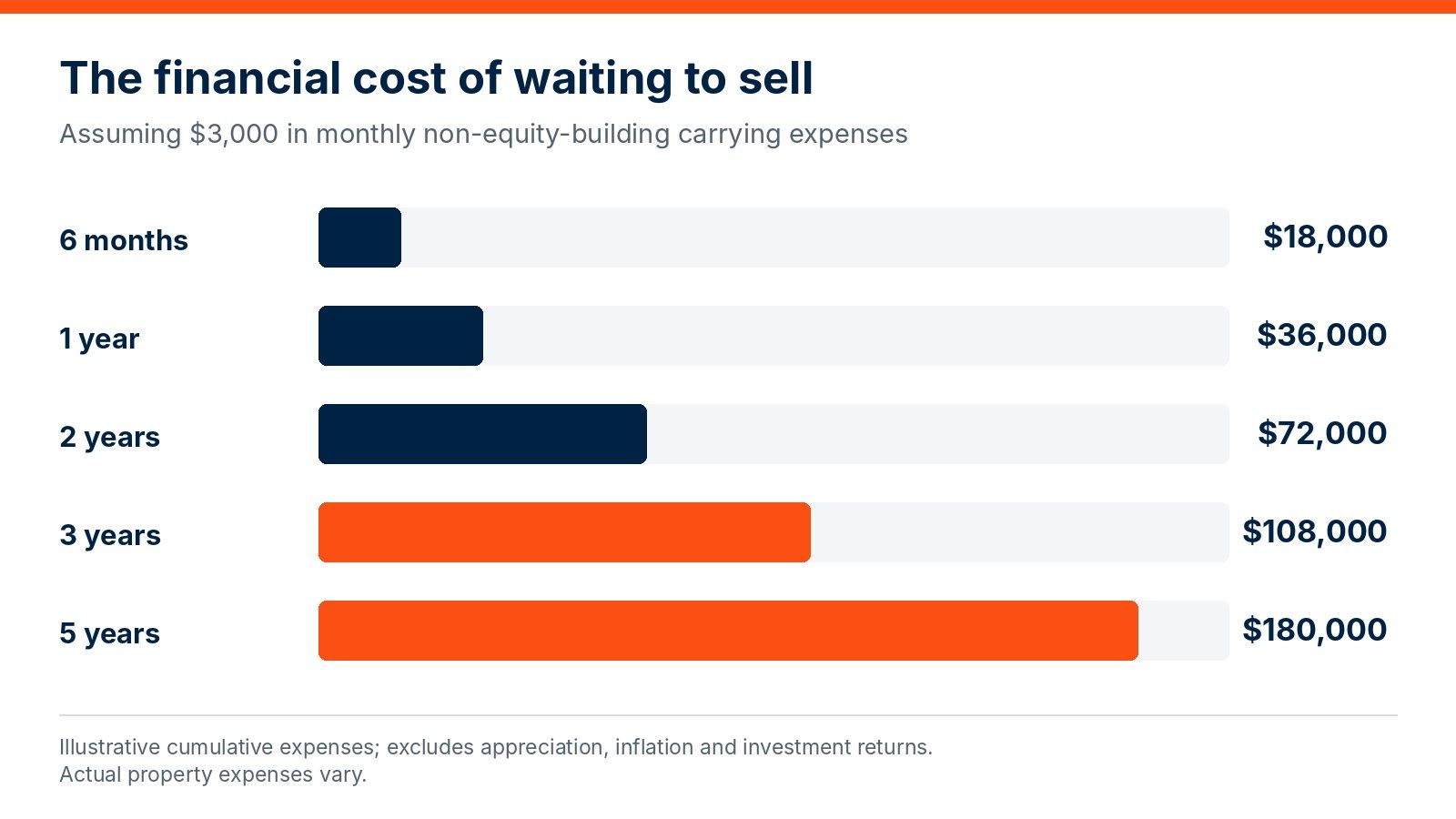
| Waiting period | Total carrying expenses |
|---|---|
| 6 months | $18,000 |
| 1 year | $36,000 |
| 2 years | $72,000 |
| 3 years | $108,000 |
| 5 years | $180,000 |
Illustrative cumulative carrying expenses. Excludes appreciation, inflation, investment opportunity costs and unexpected major repairs.
If you're holding onto that house for another three years, you've potentially spent $108,000 simply maintaining ownership of the property.
Now, if you're comfortably living in the house, that's a different conversation because you'd otherwise be spending money to live somewhere else. But if the property is sitting vacant, we need to determine whether the potential increase in its value is going to justify what you're spending to hold onto it.
How much would my home need to appreciate to justify waiting?
A home's future appreciation needs to offset the additional expenses associated with holding the property, along with any increase in eventual selling costs. For a vacant $600,000 property costing $3,000 per month to maintain, a homeowner may need considerably more than $100,000 in appreciation over three years to justify waiting.
Let's say your house was worth $700,000 several years ago, and based on the comparable properties we're looking at today, we believe its current market value is approximately $600,000.
You're not particularly excited about selling it for $600,000, so you've decided you're going to wait until it gets back to $700,000.
Well, let's run the numbers.
For this example, we're going to assume you've got a $250,000 mortgage balance, you're spending $3,000 a month holding onto the property and your estimated selling expenses are 6% of the eventual selling price.
| Financial consideration | Amount |
|---|---|
| Previous home value | $700,000 |
| Current home value | $600,000 |
| Mortgage payoff | $250,000 |
| Estimated selling expenses today | $36,000 |
| Estimated net proceeds today | $314,000 |
Actual selling expenses and commissions are negotiable. For simplicity, we're assuming an unchanged mortgage payoff and excluding taxes and investment returns.
What happens if you wait three years?
Let's assume the property actually does recover to $700,000 after three years.
| Financial comparison | Sell today | Sell in 3 years |
|---|---|---|
| Sale price | $600,000 | $700,000 |
| Estimated selling expenses | −$36,000 | −$42,000 |
| Mortgage payoff | −$250,000 | −$250,000 |
| Additional holding expenses | $0 | −$108,000 |
| Estimated economic net | $314,000 | $300,000 |
$100,000 higher selling price. $14,000 lower economic net.
In this hypothetical scenario, the cost of waiting more than offsets the financial benefit of recovering the property's previous market value.
You eventually got the $700,000 you wanted for the property, but when we account for what it cost you to get there, you're potentially $14,000 worse off than if you'd sold the house today.
That's a difficult thing for people to wrap their heads around because they've been focusing on the selling price rather than the overall financial outcome.
What would the property actually need to sell for?
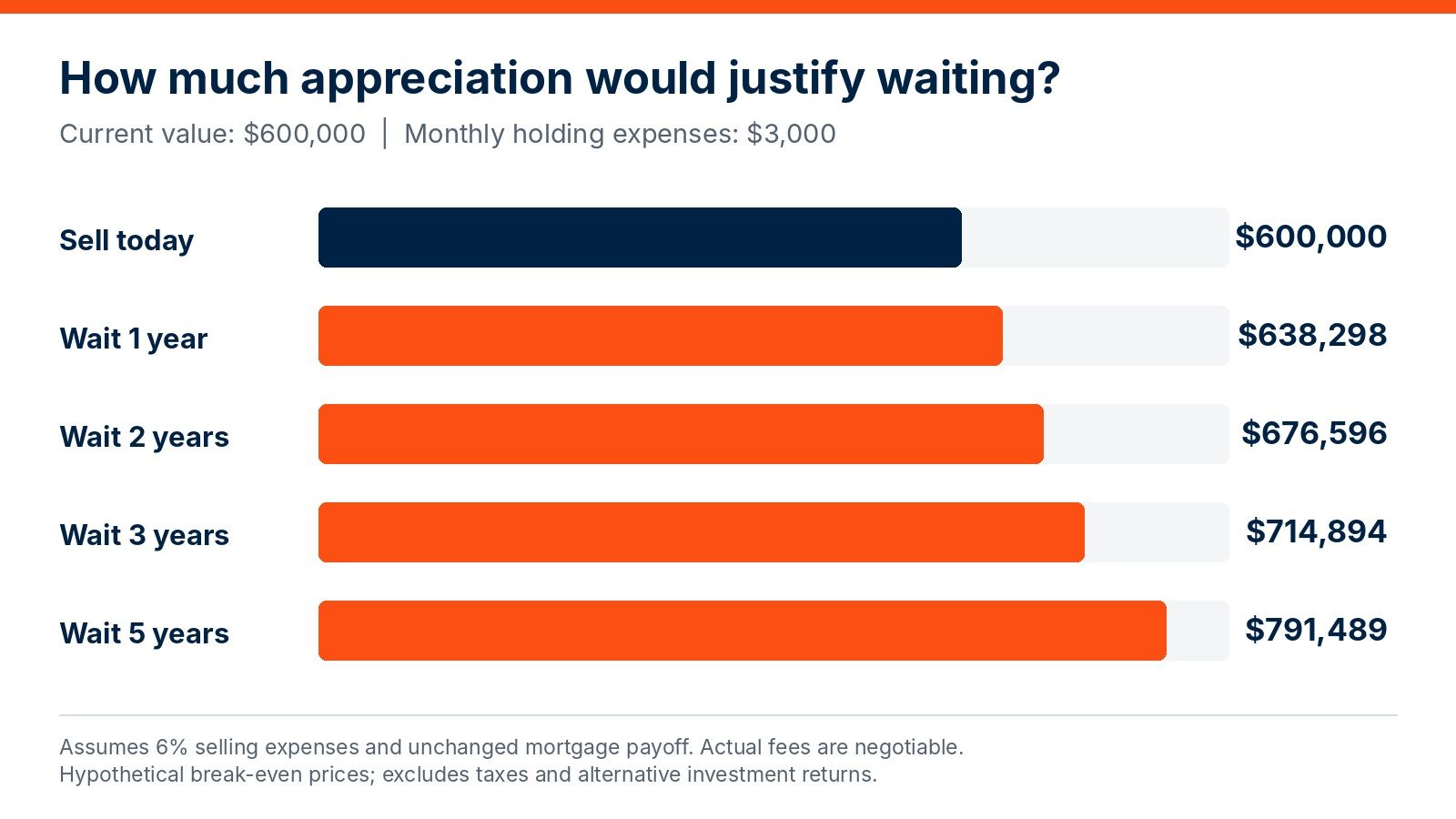
| Waiting period | Holding expenses | Required sale price |
|---|---|---|
| Sell today | $0 | $600,000 |
| 1 year | $36,000 | $638,298 |
| 2 years | $72,000 | $676,596 |
| 3 years | $108,000 | $714,894 |
| 5 years | $180,000 | $791,489 |
Estimated break-even selling prices assuming a current property value of $600,000, monthly net holding expenses of $3,000 and selling expenses of 6%. Excludes taxes, alternative investment returns and replacement housing costs.
Under these assumptions, the house would need to sell for approximately $715,000 after three years just to produce the same economic outcome as selling it for $600,000 today.
If your holding expenses are considerably lower, we may come up with a very different answer. Likewise, if the property appreciates more rapidly than we're anticipating, waiting could produce a better financial outcome.
What I want to determine is how much appreciation we're depending on, how realistic that expectation may be and whether you're comfortable taking that financial risk.
If my house returns to its 2022 value, have I really recovered my losses?
Recovering a home's previous dollar value doesn't necessarily restore its previous purchasing power. Inflation reduces what a given amount of money can purchase over time. Homeowners waiting for their properties to return to 2022 valuations should consider both the nominal selling price and what those proceeds will actually allow them to accomplish.
This takes us back to the inflation discussion at the beginning of this series. One of the challenges we're dealing with is that not only have some homeowners experienced a decline in the value of their real estate, but the purchasing power of that money has also declined.
According to the Bureau of Labor Statistics Consumer Price Index, cumulative national consumer price inflation between October 2022 and October 2026 was approximately 13.25%.
Let's look at that same house that was worth $700,000 in 2022.
| Financial comparison | Approximate value |
|---|---|
| October 2022 home value | $700,000 |
| October 2026 value needed to maintain equivalent purchasing power | $792,779 |
| Additional value needed to offset inflation | $92,779 |
| Purchasing power of $700,000 today in 2022 dollars | $618,079 |
| Purchasing power of $600,000 today in 2022 dollars | $529,800 |
Calculations use the national all-items Consumer Price Index for All Urban Consumers, not seasonally adjusted. Individual household inflation and local housing costs may differ.
If the house is currently worth $600,000, we've experienced a decline of approximately 14.3% when we simply compare the dollar amounts. However, when we account for the change in purchasing power, that decline is approximately 24.3%.
And if you're going to wait another three years for the house to get back to its previous value, we also need to consider what may happen to inflation during those three years.
This doesn't mean that inflation-adjusted property values tell us everything about the financial performance of your home. You've potentially been paying down your mortgage, you've had somewhere to live and you may have benefited from other financial advantages associated with homeownership.
It also doesn't mean that the price of another Denver home has increased at the same rate as general consumer prices.
But if the reason you're selling the house is to pull money out of it to fund your retirement, pay for senior living or accomplish something else financially, the purchasing power of that money becomes particularly important.
What could I be earning on the equity sitting in my house?
Home equity represents financial resources that could potentially be used for other purposes. Homeowners considering whether to sell should compare the benefits of retaining their property against alternative uses of their available net equity, including reducing debt, funding retirement or investing. Potential investment returns, taxes, housing needs and financial risks must also be considered.
Something else I want to look at when we're evaluating a property is what you could potentially be doing with the money you've got tied up in the house.
Going back to our previous example, we've got a $600,000 property with a $250,000 mortgage balance and estimated selling expenses of $36,000. If we sold the house today, you'd have approximately $314,000 available before any applicable taxes.
If that property is sitting vacant and you're holding onto it because you believe it's going to appreciate, you're essentially choosing to leave that $314,000 invested in real estate. That may be a perfectly reasonable financial decision, but I want to compare it against some alternatives.
What could $314,000 potentially grow to?
| Annual return | After 1 year | After 3 years | After 5 years |
|---|---|---|---|
| 2% | $320,280 | $333,219 | $346,681 |
| 4% | $326,560 | $353,207 | $382,029 |
| 6% | $332,840 | $373,979 | $420,203 |
Illustrative compound investment returns before taxes, fees and withdrawals. Actual investment returns are uncertain and can be negative.
Now, let's go back to that homeowner who's waiting three years for their house to recover to $700,000.
Instead of simply comparing the selling price today against the selling price three years from now, let's assume they could sell today and earn a hypothetical annual return of 4% on the available proceeds.
| Financial comparison | Sell today and invest | Hold and sell in 3 years |
|---|---|---|
| Initial available proceeds | $314,000 | — |
| Future property selling price | — | $700,000 |
| Future investment balance | $353,207 | — |
| Future sale proceeds after mortgage payoff and selling expenses | — | $408,000 |
| Additional property holding expenses | — | −$108,000 |
| Estimated financial position | $353,207 | $300,000 |
Simplified comparison assuming a hypothetical 4% annual investment return, unchanged mortgage payoff and $3,000 in monthly property holding expenses. Excludes taxes, investment fees, replacement housing expenses and investment returns on avoided monthly holding costs.
Under these assumptions, the homeowner could potentially be approximately $53,200 better off financially by selling the property today, even though the house ultimately recovered its previous $700,000 value.
In fact, when we incorporate that hypothetical 4% investment return into our simplified calculations, the property would need to sell for approximately $757,000 after three years to produce an equivalent financial outcome.
That's quite a bit different from simply waiting for the house to get back to $700,000.
Now, I'm not a financial advisor, and I'm certainly not telling somebody to sell their house and put all their money into the stock market. There are risks associated with any investment, including real estate. And if you need that equity to purchase another house or pay your living expenses, it may not be available to invest in the first place.
What I want to accomplish is getting people to think about the equity sitting in their real estate as part of their overall financial situation rather than simply focusing on the price of the house.
What if I'm comfortably living in my home with a low mortgage rate?
Remaining in your current Denver home may make considerable financial sense if you have affordable mortgage financing, manageable ownership expenses and no immediate reason to move. Selling would potentially release equity, but replacement housing costs and the loss of favorable financing could offset that benefit. The comparison should include both cash flow and long-term financial consequences.
Let's turn this thing around and look at it from a completely different perspective.
Suppose you've been living in your house for several years, you've got a mortgage at approximately 3%, your property meets your needs and you're really not spending all that much money every month to live there.
You may be in a very good financial position, regardless of what's happened to the value of the property over the last several years.
| Monthly housing expense | Remain in current home | Sell and rent |
|---|---|---|
| Mortgage interest | $625 | — |
| Mortgage principal | $600 | — |
| Property taxes | $350 | — |
| Insurance | $250 | $25 |
| Maintenance allowance | $400 | — |
| Rent | — | $2,800 |
| Total monthly cash outlay | $2,225 | $2,825 |
| Non-equity-building expenses | $1,625 | $2,825 |
Hypothetical comparison assuming comparable utility expenses and no HOA dues, moving expenses or additional investment income.
In this example, it costs you $600 less every month in cash out of your pocket to remain in your home, and you're also putting approximately $600 a month into equity by paying down your mortgage.
From the perspective of non-equity-building expenses, you're spending approximately $14,400 less per year to remain in the property.
Now, we'd still need to evaluate the potential benefits of accessing your existing equity if you sold. But there's a significant financial benefit associated with having an affordable place to live, particularly when the alternatives are considerably more expensive.
If you're comfortable in your house, you're financially stable and there's no compelling reason for you to move, I wouldn't necessarily recommend selling it simply because we're concerned that property values may continue to decline.
Sometimes the best real estate decision is not making a real estate transaction at all.
Related Reading — Article #3
Why Are Denver Homes Harder to Afford Even When Prices Are Falling?
Should I sell an inherited property now or wait for the market to improve?
Families holding inherited real estate should evaluate ongoing property expenses, available equity, estate administration responsibilities and the potential financial benefit of waiting. Even mortgage-free properties can generate substantial carrying costs. Tax basis, legal authority to sell, property condition and insurance requirements should also be evaluated before deciding whether to retain or sell an inherited home.
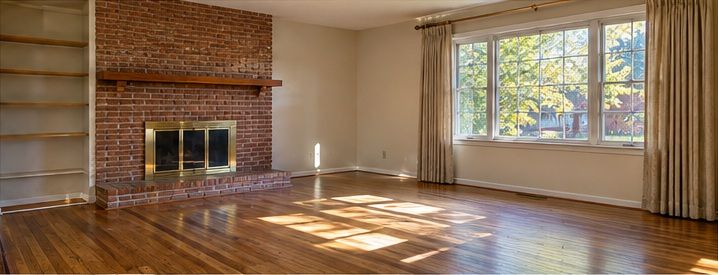
Inherited properties are a little different because quite often the people who now have responsibility for the house aren't the people who are going to be living in it.
Maybe Mom or Dad passed away, the children are living in different parts of the country and they're trying to figure out what to do with the house. Somebody's got to take care of the contents, make sure the utilities remain on, deal with the insurance company, maintain the property and ultimately figure out whether they want to keep it or get it sold.
Sometimes the family decides they're going to wait until the real estate market improves because the house is paid off, and they don't necessarily feel there's much of a cost associated with hanging onto it.
Well, even a house without a mortgage can cost a fair amount of money to own.
What does it cost to hold a mortgage-free inherited property?
| Monthly expense | Hypothetical amount |
|---|---|
| Property taxes | $350 |
| Insurance | $250 |
| Utilities | $250 |
| Maintenance allowance | $400 |
| Lawn care and property monitoring | $150 |
| Total monthly expenses | $1,400 |
If the property is worth $500,000 today, here's approximately what it would need to sell for in the future to recover those additional holding expenses.
| Waiting period | Cumulative expenses | Required future sale price |
|---|---|---|
| 1 year | $16,800 | $517,872 |
| 2 years | $33,600 | $535,745 |
| 3 years | $50,400 | $553,617 |
| 5 years | $84,000 | $589,362 |
Illustrative calculations assuming selling expenses of 6%, no mortgage and no rental income. Excludes investment opportunity costs, taxes and unexpected major repairs.
That family could spend more than $50,000 over the next three years simply holding onto the property. And we haven't included the possibility that the furnace goes out, the roof needs to be replaced or there's a water leak that nobody discovers for several weeks.
There's also the responsibility that comes with owning the property. I've worked with families who are managing real estate in Colorado while living out of state, and there's a considerable amount of coordination that can be involved in taking care of a house from several hundred miles away.
What about the tax implications of selling an inherited house?
Generally speaking, the tax basis of inherited property is determined by its fair market value at the date of the owner's death, although exceptions apply. That's an important distinction because the family may not be calculating their potential capital gain based on what Mom or Dad originally paid for the property.
The IRS provides guidance on inherited property in Publication 559. I recommend working with an estate attorney and tax professional to determine the appropriate valuation, ownership structure, authority to sell and potential tax consequences.
I'd also encourage the family to contact the insurance company to make sure the property remains appropriately insured while it's sitting vacant. The coverage requirements can vary considerably depending on the policy.
What I like to do with these situations is evaluate the property, figure out what needs to happen with the contents and determine whether it makes more sense to sell it as-is, do some basic property preparation, complete more substantial improvements or retain it.
The family doesn't necessarily need to coordinate every part of that process themselves. Depending on the situation, I can help manage the contents removal, cleanout, contractors, property preparation and eventual sale.
Should I rent out my home instead of selling it?
Renting out your Denver home may provide income while allowing you to retain ownership and benefit from potential future appreciation. However, rental income needs to be evaluated against mortgage payments, property taxes, insurance, management expenses, vacancies, maintenance and potential tax consequences. A property that rents easily isn't necessarily a financially attractive investment.
Coming from a real estate investment background, this is something I enjoy evaluating because there are several different ways we can look at the financial performance of a property.
Quite often, somebody will tell me they've decided to rent their house because they can get $3,000 a month in rent and their mortgage payment is only $2,000. They're figuring they're going to make $1,000 a month while waiting for the real estate market to recover.
Unfortunately, there's a little more to it than that.
What would the rental property actually generate?
| Monthly financial consideration | Estimated amount |
|---|---|
| Gross potential rental income | $3,000 |
| Mortgage principal and interest | −$2,000 |
| Property taxes | −$350 |
| Landlord insurance | −$250 |
| Property management allowance | −$300 |
| Vacancy allowance | −$150 |
| Maintenance and capital repair allowance | −$300 |
| Estimated monthly cash flow | −$350 |
| Estimated annual cash flow | −$4,200 |
Hypothetical rental property analysis. Actual rental income, management fees, insurance, maintenance and other expenses will vary.
Based on these numbers, rather than making $1,000 a month, you're potentially putting another $350 a month into the property just to maintain it as a rental.
But that doesn't necessarily mean it's a bad investment. Let's assume approximately $500 of that monthly mortgage payment is going toward reducing your principal balance. You're putting another $4,200 a year into the property, but you're also reducing the amount you owe on it by approximately $6,000.
Before considering changes in property value, taxes and other financial factors, you've potentially increased your net wealth by $1,800.
Now we need to look at how much equity you've got tied up in the property and whether that represents an acceptable return on your investment. We also need to consider what happens if the property continues to decline in value, the tenants move out unexpectedly or we end up having to replace a furnace.
On the other hand, if you've got a relatively small mortgage balance at a low interest rate and the property generates substantial positive cash flow, retaining it as a rental may make a whole lot of sense.
Could renting out your home affect your taxes when you eventually sell?
This is something I particularly want homeowners to be aware of before converting their primary residence into a rental property.
Under the IRS home sale capital gains exclusion guidelines, qualifying individuals may be able to exclude up to $250,000 in capital gains from the sale of their primary residence, and eligible married couples filing jointly may be able to exclude up to $500,000.
Generally, the ownership and residence requirements involve two years within the five-year period preceding the sale, along with other eligibility conditions.
If you've moved out of the property and decided to rent it for several years before selling, that decision could affect your eligibility for the exclusion. There may also be tax consequences associated with depreciation taken or allowable during the time the property was used as a rental.
The IRS Publication 527 — Residential Rental Property provides additional information about rental income, expenses and depreciation.
I'd encourage you to have a conversation with your tax professional before making that decision. We don't want to spend three years waiting for the property to recover $50,000 in value only to discover that we've potentially created a significant additional tax liability.
We also need to evaluate landlord insurance, mortgage requirements, HOA restrictions, applicable rental licensing and Colorado landlord-tenant obligations.
Renting is certainly an option. I just want to make sure we've evaluated it as an investment rather than treating it as a temporary solution to not getting the price you wanted for your house.
Should seniors wait for home prices to recover before moving?
Senior homeowners should consider their safety, independence, care needs, financial resources and quality of life before postponing a move solely because of housing market conditions. Although waiting may allow a property to appreciate, the financial and personal consequences of delaying an appropriate senior living transition can outweigh the potential increase in selling price.

This is probably the part of this conversation that's most important to me because when I'm working with seniors and their families, the real estate isn't necessarily the biggest issue we're dealing with.
Maybe Dad has passed away and Mom is still living in the house by herself. She's having a difficult time maintaining the property, she's not getting out of the house very often and the family is concerned about whether she's still able to safely live there.
But the house was worth $750,000 a few years ago, and now we're talking about selling it for $650,000. The family is reluctant to move forward because they're hoping the real estate market will recover.
I completely understand the financial concern, particularly if the equity in that property is going to be used to fund Mom's living expenses over the next several years. However, I also want to understand what postponing that move means for her.
What's happening in her life right now? What does she need? Is remaining in the house the best thing for her, or are we keeping her there because we're waiting for a particular number in the real estate market?
Those are conversations I want to have before we start talking about getting the house sold.
What does it cost to retain the home after moving into senior living?
According to the CareScout 2025 Cost of Care Survey, the median annual cost of assisted living in Colorado was approximately $79,005, or $6,584 per month.
Actual costs vary considerably depending on the community, accommodation and level of care required.
Let's assume Mom has already moved into assisted living, but the family has decided to retain her mortgage-free house until the real estate market improves. The house is costing approximately $1,400 per month to maintain.
| Monthly financial consideration | Sell the house | Retain the vacant house |
|---|---|---|
| Assisted living cost benchmark | $6,584 | $6,584 |
| Former home carrying expenses | $0 | $1,400 |
| Combined monthly expenses | $6,584 | $7,984 |
| Additional annual property expenses | $0 | $16,800 |
Illustrative comparison using the 2025 Colorado statewide assisted living median cost benchmark and hypothetical property expenses. The comparison assumes the senior has already moved into assisted living.
In this example, the family is spending another $16,800 a year retaining a house that Mom is no longer living in. Selling the property could potentially eliminate those ongoing expenses while making the available equity accessible to help fund her care.
If she hasn't moved yet, we're going to evaluate things differently. We need to look at what it costs her to remain in the house, whether she needs in-home assistance, what her care requirements are and what alternative living arrangements might cost.
There's also a special provision in IRS Publication 523 — Selling Your Home that may allow time spent in a qualifying care facility to count toward the residence requirement for the home sale capital gains exclusion under certain circumstances. A qualified tax professional can help determine whether that provision applies.
What if the money needed for the move is tied up in the house?
Sometimes the family has identified an appropriate senior living community, but they're struggling to figure out how to pay for the move because most of their parent's financial resources are tied up in the real estate.
Depending on the circumstances, there may be equity-based financing options worth exploring that could allow the senior to move before the house is sold. Those arrangements have financing costs, qualification requirements and repayment risks, so we need to evaluate them carefully alongside other alternatives.
Once we've figured out where Mom or Dad needs to be living and how we're going to accomplish that financially, then we can start working through what needs to happen with the contents of the house, what work the property needs and how we're going to get it sold.
That's the reason my philosophy is people first, contents second, real estate last. I don't want the real estate dictating what's happening in somebody's life if we can figure out a better way to handle the situation.
Should I sell now if I'm planning to buy another home?
Homeowners planning to purchase another property should evaluate both sides of the transaction rather than focusing exclusively on the decline in their current home's value. A declining housing market may reduce the price difference for move-up buyers, while downsizing homeowners may release less equity. Existing mortgage rates and replacement housing expenses also influence the decision.
We talked about this in the previous article in our Denver Housing Market series, where we looked at whether now is a good time to buy a house.
One of the things that can get overlooked when somebody is concerned about selling their house for less than it was worth a few years ago is what's happened to the value of the house they would like to purchase.
Suppose you're living in a house that was worth $600,000, and you've been thinking about moving into a house that was worth $900,000. If both properties have declined 10% in value, here's what happens.
Moving up in a declining market
| Financial comparison | Before the decline | After a 10% decline |
|---|---|---|
| Current home value | $600,000 | $540,000 |
| Replacement home value | $900,000 | $810,000 |
| Price difference | $300,000 | $270,000 |
Although your current house has lost $60,000 in value, the house you want to purchase has lost $90,000. The price difference between the two properties is actually $30,000 less than it was before.
If you're planning on downsizing, however, the numbers may work against you.
Downsizing in a declining market
| Financial comparison | Before the decline | After a 10% decline |
|---|---|---|
| Current home value | $900,000 | $810,000 |
| Replacement home value | $600,000 | $540,000 |
| Gross value difference | $300,000 | $270,000 |
Both examples assume equivalent percentage declines and exclude mortgage payoffs, transaction expenses, taxes and financing costs.
For the downsizing homeowner, there's potentially $30,000 less gross value available to release through the transaction.
But we still need to look at the financing. If you've currently got a mortgage at 3% and you're going to have to finance your next house at a considerably higher interest rate, the change in your monthly housing expenses could offset any financial advantage we've identified in the purchase price.
What I want to do is evaluate the entire transaction. What are we going to walk away with from the sale of your current house? How much are we going to spend purchasing the next one? What does your mortgage payment look like, and how much money are you going to have left in the bank when we've completed both transactions?
That's considerably more important than whether we were able to sell your current house for what it was worth in 2022.
Should I renovate my home before selling or wait for better market conditions?
Strategic property improvements may help Denver homeowners increase their net proceeds without waiting for a broader housing market recovery. However, renovation expenses, additional carrying costs, project risks and realistic resale values need to be evaluated together. The goal should be to maximize the homeowner's financial outcome rather than simply achieve the highest possible selling price.
When I'm evaluating a property for somebody, I generally want to look at several different scenarios. What happens if we sell the property exactly the way it sits today? What happens if we give it a little spit shine? What if we do some more substantial renovations and bring it up to the condition of the other houses that are selling in the neighborhood?
One of the advantages of my real estate investment background is that I've spent years evaluating these types of projects, and I've developed a pretty extensive spreadsheet that allows me to compare the financial implications of several different approaches.
I want to know what the work is going to cost, how long it's going to take, what we can reasonably anticipate selling the property for and, most importantly, what the homeowner is actually going to walk away with.
Let's assume we've got a property that we believe could sell for approximately $600,000 in its current condition. We've identified some improvements that could potentially bring the selling price up to $640,000.
| Financial consideration | Sell as-is | Improve and sell |
|---|---|---|
| Estimated selling price | $600,000 | $640,000 |
| Property preparation expenses | $0 | −$15,000 |
| Additional holding expenses | $0 | −$6,000 |
| Estimated selling expenses | −$36,000 | −$38,400 |
| Mortgage payoff | −$250,000 | −$250,000 |
| Estimated economic net | $314,000 | $330,600 |
Hypothetical comparison assuming two additional months of holding expenses and selling expenses of 6%. Actual costs, project timelines and selling prices may vary.
$16,600 potential additional economic net
Carefully selected property improvements could produce a better financial outcome than selling immediately as-is, without waiting for a broader housing market recovery.
In this particular situation, we may have an opportunity to improve the homeowner's financial position by approximately $16,600 without waiting several years for the real estate market to recover.
The work might involve getting the contents out of the house, painting, refinishing the hardwood floors, addressing some basic maintenance issues and cleaning up the landscaping.
But I don't want to automatically tell somebody they need to spend $15,000 preparing their house for sale. Maybe the numbers don't justify it, or maybe they don't have the money available to complete the work. Maybe they need to get the property sold relatively quickly and don't want to spend another two months dealing with contractors.
If that's the case, we'll evaluate the alternatives, including selling the property in its current condition.
The point is that waiting for the housing market to improve isn't necessarily the only way to improve what you're going to walk away with from the sale of your house.
There may be things we can do to improve your situation today.
How do I determine whether selling now or waiting makes financial sense?
Determining whether to sell a Denver home now or wait requires comparing current market value, expected net proceeds, ongoing ownership expenses, potential appreciation and alternative uses of available equity. Homeowners should also consider replacement housing, taxes, property condition and personal circumstances. The best decision is the one that supports their overall financial and personal objectives.
If you're trying to figure out whether you should sell your house today or wait for the market to recover, I'd encourage you to look at more than just what your house was worth a few years ago.
I want to understand what you're trying to accomplish. Are you looking to pull equity out of the property to fund your retirement? Have you inherited a house that nobody in the family wants to live in? Are you thinking about moving into a larger property, or are you simply concerned about what's happening to home values?
Once we've established what you're trying to accomplish, we can start putting together the financial scenarios that are relevant to your situation.
| Selling now may make sense if... | Waiting may make sense if... |
|---|---|
| You're carrying a vacant property. | You're comfortably living in your home. |
| You need equity to fund your next stage of life. | You have affordable mortgage financing. |
| Holding expenses are consuming your equity. | Your ongoing ownership expenses are manageable. |
| You've relocated and are carrying two properties. | Selling would substantially increase your housing expenses. |
| You have a better use for the available equity. | You have no immediate need to access your equity. |
| Waiting could affect your tax exclusion eligibility. | You can comfortably tolerate potential declines in value. |
| Your personal or family circumstances require a change. | You have the financial and personal flexibility to wait. |
What I'd like to do is sit down with you, evaluate the property and put together several different scenarios. Maybe it makes sense to sell the house in its current condition. Maybe we put a little money into it and improve what you're going to walk away with. Maybe we look at renting the property, or maybe the best thing for you to do is stay right where you are.
You're driving the bus. I'm here to facilitate.
What I care about is that you understand your options, the financial implications associated with each one and that you're making a decision based on what's best for you and your family.
The question isn't simply when your house will recover its previous value. It's whether waiting for that recovery is going to improve your overall financial situation and help you accomplish what you're trying to do in your life.
If you're in Broomfield, Arvada, Westminster, Thornton or anywhere in the Denver Metro area, give me a call. Let's sit down, run the numbers and figure out what makes sense for your particular situation.
Scott Jensen
ReZion Realty | Brokered by eXp Realty
Broomfield, Colorado | Serving Denver Metro
Phone: 720-352-7704
Email: scott@rezion.us
People first, contents second, real estate last.
Continue Reading the Denver Housing Market Series
I've put together this series to help Denver-area homeowners and prospective buyers better understand what's happening in our housing market and how those changes may affect their financial decisions.
- Article #1 — Is Inflation Driving Denver Home Prices Down?
- Article #2 — How Much Value Have Denver Homes Really Lost Since 2022?
- Article #3 — Why Are Denver Homes Harder to Afford Even When Prices Are Falling?
- Article #4 — Why Is My Denver Home Worth Less Than Its Appraised Value?
- Article #5 — Why Are So Many Denver Homes Expiring Without Selling?
- Article #6 — Is Now a Good Time to Buy a House in Denver?
- Article #7 — Should I Sell My Denver Home Now or Wait for Prices to Recover? (You are here.)
- Coming next: Article #8 — How Do You Know When Buying or Selling a Denver Home Makes Financial Sense?
Research Sources
- Denver Metro Association of Realtors — October 2026 Market Trends Report
- Federal Housing Finance Agency — Denver Metropolitan House Price Index
- Bureau of Labor Statistics — Consumer Price Index for All Urban Consumers
- IRS Publication 523 — Selling Your Home
- IRS Publication 559 — Survivors, Executors and Administrators
- IRS Publication 527 — Residential Rental Property
- IRS Topic 701 — Sale of Your Home
- CareScout — Cost of Care Survey
Market information is based on reporting available as of the November 24, 2026 fact audit. Financial scenarios are hypothetical and do not represent actual client transactions, guaranteed selling prices, investment returns or future market performance. Financing costs, property expenses, commissions and fees vary. Consult appropriate legal, tax, mortgage, insurance and financial professionals regarding your individual circumstances.
Categories
Recent Posts